
Risk Proofing Procurement: Managing Supply Chain Disruptions in a Volatile World

By Puan Siti Safiah, Director of TenderPintar Sdn Bhd
Blog Overview
Public sector procurement needs to move beyond reacting to supply chain disruptions towards proactively identifying and managing risks. Supplier failures, price volatility, regulatory changes, fraud, logistics disruptions and other risks can affect the continuity of public services.
By combining digital tools, data driven risk monitoring, strategic planning and strong governance, procurement teams can better anticipate disruptions, respond more effectively and build more resilient procurement systems.
Procurement in an Age of Uncertainty
Recent global events, from pandemics and geopolitical conflicts to inflationary pressures and logistics bottlenecks, have exposed a critical reality: supply chains are far more fragile and interconnected than previously assumed. What was once considered a stable, predictable system is now characterized by frequent disruptions and cascading risks.
For the public sector, the implications are significant. Procurement is no longer just about sourcing goods and services efficiently. It is about ensuring continuity of public service delivery under uncertain conditions. Delays in critical supplies, contractor failures, or sudden price spikes can directly affect infrastructure projects, healthcare delivery, and essential government operations.
In this evolving landscape, procurement must transition from a transactional function into a strategic risk management capability. Agencies must not only respond to disruptions but anticipate them, building systems that are resilient, adaptive, and data driven.
What Are the Main Procurement Risks Public Sector Agencies Face?
Understanding Procurement Risks
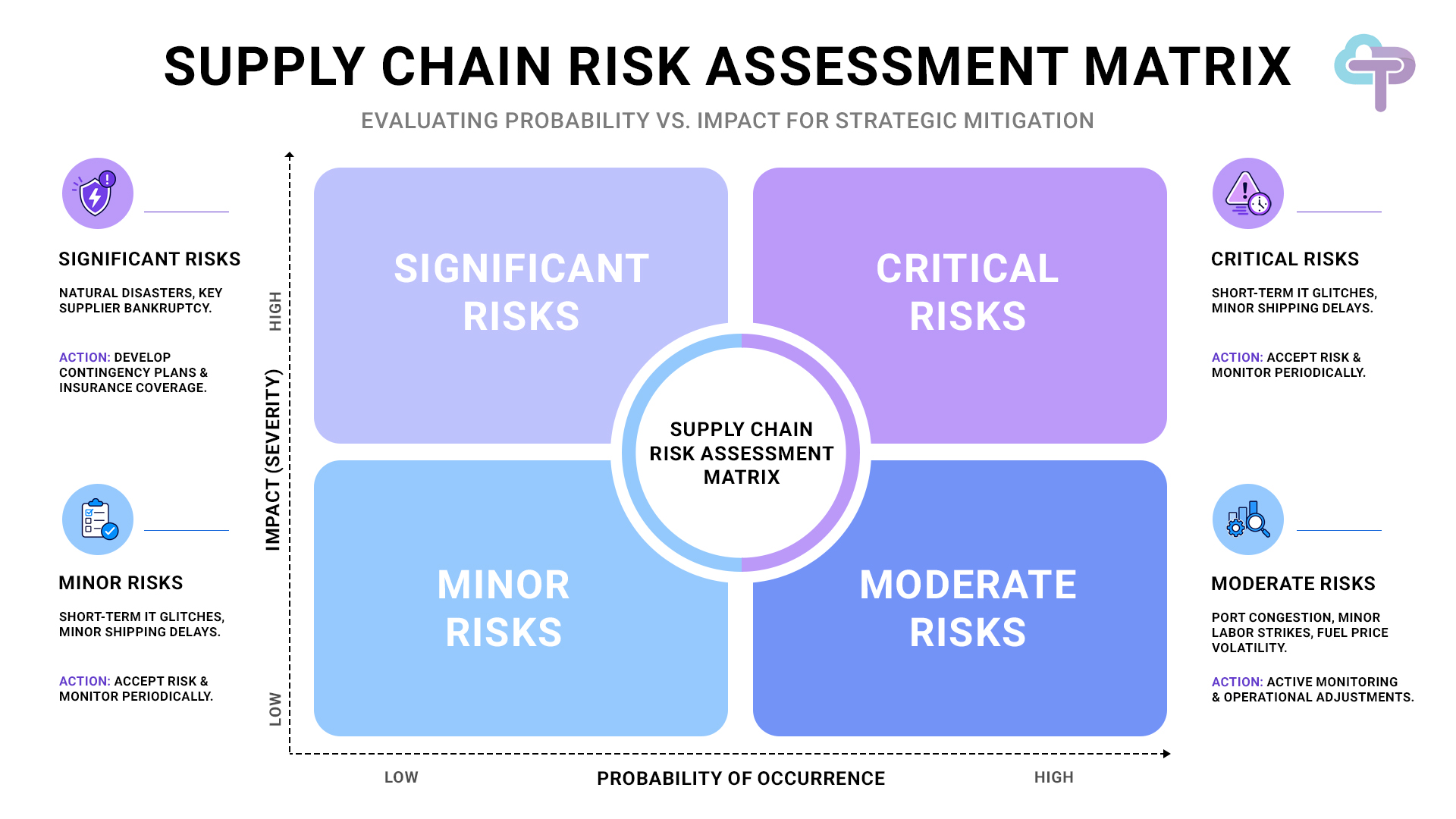
To effectively manage risk, procurement teams must first develop a structured understanding of the types of risks embedded within their supply chains. These risks are multi-dimensional and often interconnected.
- Supplier Insolvency or Failure
Suppliers may face financial distress, operational breakdowns, or capacity constraints that prevent them from fulfilling contractual obligations. This risk is particularly acute when agencies rely heavily on a small number of vendors or specialized providers.
- Price Volatility and Market Fluctuations
Global commodity price shifts, currency fluctuations, and inflationary pressures can significantly impact procurement costs. Without proper safeguards, budgets can quickly become inadequate, leading to project delays or scope reductions.
- Regulatory and Compliance Risks
Procurement activities must adhere to strict legal and regulatory frameworks. Changes in policies, trade regulations, or compliance requirements can introduce delays or invalidate procurement decisions if not managed carefully.
- Fraud and Corruption Risks
Public procurement is inherently exposed to risks such as bid rigging, collusion, and conflicts of interest. Weak controls or lack of transparency can undermine integrity and erode public trust.
- Operational and Logistical Risks
Transportation delays, port congestion, and disruptions in manufacturing hubs can affect delivery timelines. These risks are often external but have direct operational consequences.
Collectively, these risks highlight the need for procurement to adopt a holistic risk management approach, integrating financial, operational, and governance considerations.
How Can Procurement Teams Move From Reactive to Proactive Risk Management?

Traditionally, procurement functions have been reactive, addressing issues only after they materialize. For example, supplier failure is often discovered only when deliveries are missed, and cost overruns are addressed only after budgets are exceeded.
In a volatile environment, this approach is no longer viable. Procurement must evolve toward proactive and predictive risk management, leveraging digital technologies and data analytics.
- Predictive Analytics
Advanced analytics tools can identify patterns and trends that signal potential risks. For instance, declining supplier performance, delayed shipments, or financial instability indicators can be detected early, allowing intervention before failure occurs.
- Supplier Risk Scoring
Digital platforms can assign risk scores to suppliers based on multiple factors, including financial health, past performance, compliance history, and geopolitical exposure. This enables procurement teams to prioritize monitoring and mitigation efforts.
- Real-Time Alerts and Monitoring
Automated alerts notify procurement officers of deviations from expected performance, such as delivery delays or contract breaches. This ensures timely response and minimizes impact.
- End-to-End Visibility and Audit Trails
Digital procurement systems provide full traceability of transactions, enhancing transparency and accountability. This is particularly important for managing compliance and mitigating fraud risks.
- Scenario-Based Decision Support
Modern systems can simulate different risk scenarios, such as supply disruptions or price increases, helping decision-makers evaluate potential impacts and choose optimal strategies.
By adopting these capabilities, procurement shifts from a reactive posture to a forward-looking, intelligence-driven function.
How Can Public Sector Agencies Mitigate Procurement Risks?

While digital tools provide visibility and insights, effective risk management ultimately depends on well-designed strategies and policies.
- Supplier Diversification
Relying on a single supplier or a limited vendor pool increases vulnerability. Diversifying suppliers, across geographies and capabilities, reduces dependency and ensures alternative sources are available during disruptions.
- Scenario Planning and Stress Testing
Procurement teams should conduct regular scenario planning exercises to assess the impact of potential disruptions. This includes identifying critical suppliers, evaluating worst-case scenarios, and developing contingency plans.
- Framework Agreements and Flexible Contracts
Framework agreements allow agencies to engage multiple pre-approved suppliers, enabling faster response during emergencies. Flexible contract terms, such as price adjustment clauses, can also mitigate the impact of market volatility.
- Strategic Stockpiling and Inventory Management
For critical goods, maintaining buffer stock can provide a safety net against supply disruptions. However, this must be balanced with cost considerations and storage constraints.
- Strengthening Supplier Relationships
Strong relationships with suppliers enhance communication, trust, and collaboration during crises. Suppliers are more likely to prioritize agencies with whom they have long-term partnerships.
- Capacity Building within Procurement Teams
Risk management requires specialized skills. Training procurement officers in risk assessment, data analysis, and strategic sourcing is essential for building institutional capability.
These strategies collectively create a multi-layered defense, ensuring procurement systems are robust and adaptable.
Key Takeaways
- Procurement risks can come from supplier failures, price volatility, regulatory changes, fraud, logistics and other interconnected factors.
- Public sector procurement needs to move from reactive risk management towards proactive and predictive approaches.
- Digital tools can improve supplier monitoring, visibility, traceability and decision making.
- Supplier diversification, scenario planning, flexible contracts and stronger supplier relationships can help reduce exposure to disruptions.
- The goal of risk management is not to eliminate uncertainty, but to build procurement systems that can respond to it effectively.
Conclusion
In today’s uncertain and rapidly changing environment, procurement can no longer operate as a purely administrative function. It must evolve into a risk intelligence function, capable of anticipating disruptions, mitigating impacts, and ensuring continuity of public service delivery.
By combining digital tools, strategic planning, and strong governance, public sector organizations can build procurement systems that are not only efficient but also resilient. In doing so, they safeguard not just supply chains, but also public trust and institutional credibility.
Ultimately, risk-proofing procurement is not about eliminating uncertainty. It is about managing it intelligently and proactively, ensuring that governments remain prepared for whatever challenges lie ahead.
Latest Articles

Speed with Integrity: Digitising Procurement Workflows to Cut Red Tape
For decades, public procurement has faced a persistent challenge: [...]